ETFs and Emerging IPOs

The ecosystem of exchange-traded funds (ETFs) tracking the S&P 500—notably IVV, VOO, and SPY—remains one of the most efficient ways for investors to gain diversified U.S. equity exposure. These funds, which we have discussed before, often serve as a foundation for many retirement investment portfolios. The S&P 500 passively replicates a float-adjusted, market-cap-weighted index that already reflects about 80% of U.S. market capitalization. However, the definition of “the market” itself is evolving rapidly as mega-scale private firms approach their Initial Public Offerings (IPOs).

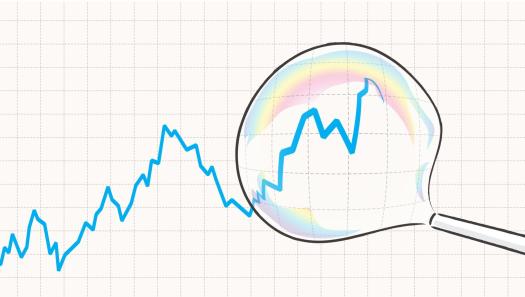
S&P 500 ETFs may soon include large private companies with near-term IPOs from SpaceX, OpenAI, and Anthropic

Big IPOs coming soon

A key emerging issue is the IPOs of currently private companies like SpaceX, OpenAI, and Anthropic. Will they enter the index more quickly than historical precedent? Traditionally, S&P 500 inclusion required at least one year of public trading, sufficient float, liquidity, and sustained profitability. Yet, according to a May 3 Wall Street Journal article by James Mackintosh, index providers are considering changes. Specifically, they may waive profitability requirements and accelerate timelines for “megacap” IPOs. These changes will help meet investor demand for access to high-profile growth companies. Complementary reporting indicates proposals to reduce the waiting period from 12 months to as little as six months and relax earnings criteria entirely for the largest firms.

Such changes would materially affect ETF composition. Because the S&P 500 is market-cap weighted, the rapid inclusion of trillion-dollar entrants could increase index concentration, amplifying the dominance of a small number of firms. The Magnificent 7 already contribute to this issue in today’s top-heavy index structure. More large entrants could raise expected returns if these firms deliver strong growth, but also increase volatility and drawdown risk if valuations prove fragile.

ETF Investors take notice

For ETF investors, the implications may extend to taxation. While ETFs like IVV, VOO, and SPY are generally tax-efficient due to in-kind creation/redemption mechanisms, rapid index turnover—especially around large IPO inclusions—can trigger capital gains distributions in some cases. Additionally, investors in taxable accounts may face indirect tax consequences if funds must rebalance aggressively to incorporate newly eligible megacaps.

In sum, S&P 500 ETFs remain low-cost, core portfolio holdings, but their future risk-return profile may shift. The potential fast-tracking of firms like SpaceX, OpenAI, and Anthropic reflects a broader transition: from a backward-looking index grounded in profitability to a more forward-looking benchmark shaped by scale, narrative, and investor demand.

ETFMathGuy is a subscription-based education service for investors interested in using commission-free ETFs in efficient portfolios.
ETFMathGuy is a subscription-based education service for investors interested in tax-efficient investing with ETFs

Geopolitical Risks and ETFs for diversification

Geopolitical risks—whether from armed conflict, trade disputes, sanctions, or shifting alliances—can quickly ripple through global markets. For investors, the challenge is not predicting every headline, but building portfolios resilient enough to withstand them. Exchange-traded funds (ETFs) offer a practical and efficient way to manage these risks through diversification, liquidity, and targeted exposure to major economic sectors.

As Geopolitical Risks rise, ETFs may offer opportunities for diversification.

Energy and Financial Sectors

Sector ETFs, in particular, allow investors to adjust allocations in response to evolving geopolitical conditions. For example, during periods of conflict or supply disruption, energy prices often rise. An ETF like the Energy Select Sector SPDR Fund (XLE) provides diversified exposure to major U.S. energy producers and services firms. Rather than betting on a single oil company, investors gain broad participation in the sector. ETFs like this help reduce company-specific risk while maintaining exposure to a potential geopolitical tailwind.

Financials also react differently depending on the nature of the crisis. Rising defense spending or inflationary pressures may boost interest rates, supporting bank profitability. The Financial Select Sector SPDR Fund (XLF) offers diversified access to large U.S. banks, insurers, and capital markets firms. In contrast, sanctions or global slowdowns can pressure multinational lenders, underscoring why diversified sector exposure from ETFs is preferable to concentrated stock positions.

Other Sector ETFs

Technology presents a more nuanced case. Heightened tensions—particularly between major economies—can disrupt semiconductor supply chains and global trade. Yet long-term digital transformation often continues regardless of short-term instability. The Technology Select Sector SPDR Fund (XLK) spreads exposure across hardware, software, and IT services leaders, balancing cyclical and structural growth drivers.

Beyond these sectors, investors can use utilities, healthcare, consumer staples, or defense-focused ETFs to dampen volatility further. Defensive sectors such as the Utilities Select Sector SPDR Fund (XLU) and the Consumer Staples Select Sector SPDR Fund (XLP) often hold up during uncertainty because demand remains relatively stable.

Conclusions of ETF investing to manage geopolitical risks

Ultimately, ETFs help address geopolitical risk not by eliminating volatility, but by potentially reducing it through diversification into key sectors. Their transparency, intraday liquidity, and broad diversification allow investors to rebalance efficiently as conditions evolve. In a world where geopolitical shocks can emerge overnight, sector ETFs provide a flexible toolkit for navigating uncertainty without abandoning long-term investment discipline.

ETFMathGuy is a subscription-based education service for investors interested in using commission-free ETFs in efficient portfolios.
ETFMathGuy is a subscription-based education service for investors interested in tax-efficient investing with ETFs

Globalization and International Stock ETFs

Globalization over the last several decades has increased the correlation between domestic and international stock ETF returns. In this post, we quantify how this relationship has recently changed, what may be contributing to this change, and what it means for ETF investors.

Correlation changing?

Correlation measures potential portfolio diversification benefits. A high correlation indicates that the prices of two assets move similarly to one another. For diversification benefits, portfolios should contain assets that do not exhibit high correlation with each other. We previously discussed the correlation between the S&P 500 and a wide variety of asset classes. Below, we show that there appears to be a recent downward trend in correlation between U.S. and international stocks.

90-day Correlation of Total Returns of International Stocks (VEA) against the S&P 500. Downward trending suggests a reduction in globalization.
90-day Correlation of Total Returns of International Stocks (VEA) against the S&P 500

Here, the short-term correlation between the total returns of the iShares Core S&P 500 ETF (ticker: IVV) and the Vanguard FTSE Developed Markets ETF (ticker: VEA) hit a recent low from its longer-term average. This reduction in correlation suggests that U.S. and international stock markets are moving more independently than in the past. Thus, there is the potential to offer enhanced diversification benefits for investors.

Tariffs and Globalization

The most likely explanation of lower correlations is the news of significant tariffs on imported goods to the U.S., and perhaps more broadly, due to different central bank policies and geopolitical factors. This new trend appears to be reversing much of the investments in globalization that led to a high correlation between domestic and international stock markets. However, since most of these investments take some time to go into effect, we shouldn’t expect a rapid shift in correlations between domestic and international stock markets. The longer and more significant the tariffs are, the greater the chance that globalization will decrease. For ETF investors, enhanced diversification from international stock market investments may offer greater risk reduction than it did previously.

ETFMathGuy is a subscription-based education service for investors interested in using commission-free ETFs in efficient portfolios.
ETFMathGuy is a subscription-based education service for investors interested in tax-efficient investing with ETFs

Funding Roth Conversions

In our post from last week, we highlighted the potential benefit of converting tax-deferred assets to a Roth IRA. We showed that the amount of tax alpha, or the amount of additional return realized from converting, depended on current versus future tax rates. However, we simplified how a retiree may fund the tax liability by using retirement assets. In this post, we show the additional tax alpha when funding Roth conversions without using tax-deferred assets.

Funding Roth Conversions Using Assets in a Taxable Account

The additional tax-alpha from using taxable account assets arises due to these assets no longer generating taxable interest and dividends owed each year. Instead, a retiree could use these assets to pay for funding Roth conversions. Consequently, the benefit of funding Roth conversions with taxable account assets grows over time. But, two additional complexities arise. The return on the underlying asset is the first. The ultimate intended use of the taxable account assets is the second complexity. Markets dictate the first complexity, but not the second.

So, we may not know how the stock and bond market will perform in the future. But, a retiree may know whether they will use taxable assets to supplement their retirement income needs. If taxable assets are used to supplement retirement income and/or for funding Roth conversions, then there will likely be a long-term capital gain that would reduce the tax alpha. Otherwise, taxable assets may pass to an heir with a step-up in cost basis, thereby eliminating the capital gain tax owed by the retiree.

Case Study Results from Over 20 Years

To help quantify the additional tax alpha, we revisited the analysis in the Roth (2020) article for a 20-year period. We added the two complexities mentioned above, that the tax alpha will depend on market returns and if the taxable account assets received the step-up in cost basis. The left panel below shows the tax alpha without the step-up included. The right panel shows tax alpha when the step-up occurs.

Key Insights from funding Roth conversions

The results above indicate the importance of the step-up in cost basis on the tax efficiency of funding Roth conversions. The horizontal axis represents the fraction of the cost basis of the taxable account assets used. So, using current interest, dividends or available cash from a taxable account implies a cost basis equal to 1, and highly appreciated assets would have a value approaching 0.

  • From the left pane, the tax alpha ranges from 0.10% to 0.30% per year over twenty years. Lower (higher) tax alpha occurs when markets underperform (overperform) their historical average returns.
  • When the heir realizes the tax-efficient step-up in cost basis, the tax alpha is up to 0.10% per year over twenty years. Also, the breakeven for this additional tax alpha occurs at approximately 0.70, implying that a highly appreciated asset intended for an heir should not be used for funding Roth conversions.
ETFMathGuy is a subscription-based education service for investors interested in using commission-free ETFs in efficient portfolios.
ETFMathGuy is a subscription-based education service for investors interested in tax-efficient investing with ETFs

Asset Correlations in 2022

In 2022, many long-term trends in asset correlation appear to be changing. In this post, we discuss the longer-term trends in several popular asset class correlations and highlight recent changes that continued from the first half of the year.

Short-Term Correlations and Long-Term Trends

The stock and bond markets continued their downward slide this month. The iShares Core S&P 500 losses for 2022 reached 24%. In addition, the bond markets continue their losses for the year, with the iShares Core U.S. Aggregate Bond Market ETF down about 15%. This latter result is quite surprising, given the long-term correlation between the stock and bond market is 5%, but has recently grown to over 40%. Thus, the stock and bond market returns are more similar than they were in the past, so provide fewer diversification benefits. The chart below shows this upward trend in the correlation between the stock and bond markets in blue. The horizontal dotted line shows the long-term correlation from returns dating back to February 2004.

90-Day Asset Correlation of Total Returns against the S&P 500 Index

Asset Correlation Among Other Sources

The chart above also highlights the diminished effect of other sources on a portfolio’s diversification. For example, international equities are often sought for their diversification benefit. However, the long-term correlation of 88%, which also appears in this figures legend, hasn’t changed much this year. Bitcoin’s long-term correlation is 21%, but this correlation has steadily grown to over 60% this year. The one asset that has performed well this year is a direct investment in the U.S. Dollar ETF, ticker UUP. Long-term, the dollar has an insignificant correlation to the S&P 500. However, in 2022, the dollar’s correlation to the S&P 500 has grown significantly negative, as interest rate rises have increased demand for U.S. dollars. The chart below shows the total return of the five ETFs discussed here.

2022 year to date returns of a variety of assets classes
2022 Total Returns for ETFs associated with the S&P 500, Bonds, International, Bitcoin, and U.S. Dollars.

Given the economic pressures creating these effects on the markets, the remainder of 2022 may continue to surprise investors. In particular, asset classes that formerly had low correlations to the stock market may continue to diverge from their long-term values.

ETFMathGuy is a subscription-based education service for investors interested in using commission-free ETFs in efficient portfolios.
ETFMathGuy is a subscription-based education service for investors interested in tax-efficient investing with ETFs

Happy new year!

Happy new year from ETFMathGuy! In this post, we will provide some updates to our plans for 2022.

happy birthday to you wall decor
Photo by Anna Tarazevich on Pexels.com

New Priorities

As 2022 begins, we decided to reset our priorities for this website. Up until now, we provided the following services to our subscribers.

For 2022, we’ve decided that the cost to produce and maintain the free and premium portfolios was simply too high. We also recognized that, while these portfolios did exceed their objective in 2020, they did not in 2021. All premium subscribers will receive a pro-rated refund of their subscription payments shortly. In the meantime, free and premium subscribers can now access the final monthly portfolios, based on data through December 31, 2021.

Coming soon

So, after receiving very positive praise on our retirement calculator, we’ve decided to make improving it a priority. Also, thanks to significant feedback from individual investors and financial services professionals, below is a list of features we hope to provide in the near future:

  • Projection of retirement assets at beginning of retirement for pre-retiree planning
  • Optimized social security starting age for single or married couples
  • Medicare Income-Related Monthly Adjustment Amount  (IRMAA) tax
  • State taxes, as applicable
  • 3.8% medicare surtax
  • Roth conversions using either IRA or taxable account funds
  • Robustness checks with an automated sensitivity analysis for selectable uncertain variables
  • Risk assessment with simulation of uncertain stock market returns, life exptancy, after-tax income needs, and others
  • Real estate income and residual value
  • Support for Financial Independence, Retiree Early (FIRE)
  • Online storage of previous results for future reference

Of course, our retirement calculator already has many features discussed in the FAQ and listed at the top of the calculator. Also, if you are interested in greater details, you are welcome to download this whitepaper that we developed recently to describe the current model in greater depth.

We hope you have a wonderful 2022!

ETFMathGuy is a subscription-based education service for investors interested in using commission-free ETFs in efficient portfolios.
ETFMathGuy is a subscription-based education service for investors interested in tax-efficient investing with ETFs

Backtesting for 2021 and ETFMathGuy portfolio enhancements

Due to portfolio performance not meeting our recent expectations, we revisited our backtesting results from August 2018 and produced important new insights and portfolio construction enhancements. We discovered that a longer sample period, identified previously, no longer applied. The image below shows that a three-month sample period produced the best returns from January 2020 to August 27, 2021. Each point on this line plot represents annualized backtested performance for 19 monthly portfolios over this testing period.

Backtesting for 2021 to find the optimal sample period (months) for ETFMathGuy Portfolio Construction

What performance predictions occurred with this shorter sample period?

Using this shorter sample period, we produced the plot below of total return since January of 2020. We chose this time period to include the full pre and post-term effects of the coronavirus on the world economy. In addition, and based on subscriber feedback, we now exclude ETFs that issue K-1 tax forms to investors. We made this decision because these 22 ETFs had a marginal effect on backtested performance that used over 1,000 other ETFs that do not issue K-1s. We also increased our ETF filter threshold of median volume to improve liquidity for future portfolios that will likely have a higher turnover rate. The consequences of these decisions on backtested performance appear below.

Backtested Returns from 2020-2021 of the ETFMathGuy Optimal Portfolios

Future ETFMathGuy portfolios

Given the improvement potential identified from this updated backtesting for 2021, all portfolios published in September 2021 and later will follow these updated findings. This update for the September portfolios will likely indicate a significant change from the August portfolios. However, future monthly portfolios will change less significantly. So, we encourage subscribers to log in and see the September ETFMathGuy portfolios that are based on this evidence-based analysis.

ETFMathGuy is a subscription-based education service for investors interested in using commission-free ETFs in efficient portfolios.

Taxes on Cryptocurrencies

In our post last week, we showed how the risk of cryptocurrencies appears much higher than the risk of stocks and bonds. This week, we will discuss some of the taxes on cryptocurrencies, and how they differ from buying and selling an ETF.

various cryptocurrency on table
Photo by Roger Brown on Pexels.com

Taxing gains and losses

When trading an ETF in a taxable account (e.g. not an IRA or Roth IRA account), trades are generally subject to taxes much like that of a stock. So, gains that are realized after holding for less than a year are taxable as ordinary income. However, to reduce taxes owed on these gains, an investor can offset them with realized losses on other ETFs. Termed tax-loss harvesting, such an approach can have significant economic benefits. But, what if the investor wishes to buy these ETFs they just sold because they anticipate it to appreciate again?

Wash Sale Rules

Selling, then rebuying, an ETF within 30 days violates the Wash Sale Rule. Consequently, such a violation means that the loss on the ETF investment can not be claimed for tax reasons, effectively eliminating the opportunity to tax-loss harvest. But, based on experts cited in this recent CNBC article, wash sale rules do not apply to taxes on cryptocurrencies. The article does caution that some caveats do apply. It suggests that selling a cryptocurrency one day and buying it again the next could still enable tax-loss harvesting. Given the recent wild swings in cryptocurrency prices, and recent gains in some ETFs, investors may wish to consider this tax-loss harvesting approach.

Free and Premium Portfolios Now Available

Lastly, this post is a reminder that the latest free and premium optimal portfolios are now available for your review. So, please log in and see how the latest market conditions have affected these ETF portfolios.

Note:  This post has been prepared for informational purposes only, and is not intended to provide, and should not be relied on for, tax, legal or accounting advice. You should consult your own tax, legal and accounting advisors before engaging in any transaction.
ETFMathGuy is a subscription-based education service for investors interested in using commission-free ETFs in efficient portfolios.

Measuring cryptocurrency risk

Cryptocurrency risk is well known to be very high for many reasons. However, both individual and institutional investors continue to evaluate it as part of their investment portfolios. This post discusses recent cryptocurrency trends in a diversified portfolio and how the risks of this alternative investment compare to mainstream investments like stocks and bonds.

Volatility estimates

Volatility is one common way of assessing the risk of any investment. For the stock market, we provide a historical perspective, updated daily, to see how volatility changes over time for the stock market. But, how does this volatility compare to investments in cryptocurrency? The chart below shows a 3-month annualized volatility for the last several years of the stock market, measured with the ETF IVV, the bond market, measured by the ETF AGG, and the crypto market, measured by the Grayscale Bitcoin Trust  (GBTC). As this chart shows, bond volatility is the lowest, averaging between 3-4%. Stock volatility is higher, averaging between 15 – 20%. Cryptocurrency risk is about five times higher than stocks, with average volatility between 90-100%.

3-Month Annualized Volatility of the stock, bond, and cryptocurrency markets. Source: ETFMathGuy.com
3-Month annualized volatility of the stock, bond, and cryptocurrency markets. Source: ETFMathGuy.com

How much to allocate to cryptocurrency?

This recent WSJ article provided some guidance for individual investors interested in investing in cryptocurrency. While the answers to this question really depend on the individual’s risk tolerance, this article suggested between 1-2%. So, even if the value of the crypto investment hits $0, the investor limits their loss to this original investment amount. But, given the high levels of volatility, more frequent rebalancing may be prudent. Thus, if there is a substantial increase in the price of a crypto investment, the targeted 1-2% allocation would most likely require selling some of the crypto gains.

Unfortunately, selling short-term gains can be “expensive”, especially for those individual investors in a higher income tax bracket. In this case, the use of a Roth IRA may be the best approach. Why? An investor can realize Roth IRA gains tax-free if taken after age 59 1/2 from an account open for more than five years.

ETFMathGuy is a subscription-based education service for investors interested in using commission-free ETFs in efficient portfolios.

Recap of the first half of 2021

Greeting ETFMathGuy subscribers! This post is a reminder that the latest free and premium optimal portfolios are now available for your review. So, please log in and see how the latest market conditions have affected these ETF portfolios. To begin, we discuss value versus growth ETFs and recent trends in their returns.

Recent returns on value investing leveling off?

A few months ago, we wrote about how value-driven ETFs returned about 5% more in the first quarter than growth ETFs. Revisiting the returns of the ETFs IVV, VUG, and VTV for the first half of 2021 shows this gap has shrunk to 3% after growing to more than 10%. In fact, as the chart here shows, the value ETF is below its early May high, while the growth ETF appears to have begun a new upward trend.

Total returns of value and growth ETFs.
The total return of value and growth ETFs in the first half of 2021. Source: www.ETFReplay.com

Is the relationship between value and growth ETFs typical?

The relationship between two variables can be directly measured using correlation which varies between 1 and -1. So, a correlation of 1 between two investment returns indicates their returns are identical. Traditionally, the correlation between value and growth investments was around 75%. However, as this Wall Street Journal article highlights, the current correlation between growth and value is now below 25%.

Correlation between value and growth returns.
Source: Wall Street Journal, June 28, 2021, by James Mackintosh

Performance of the ETFMathGuy Premium Portfolios

Based on actual investment performance, the risk and return of the moderate and aggressive portfolios over the last 18 months appear below. Consequently, this period includes all of the calendar year 2020, and the first half of 2021.

ModerateAggressiveS&P 500 (IVV)
volatility (risk, annualized)19.5%22.5%21.2%
total return23.9%32.7%36.4%
Annualized risk and total return of the ETFMathGuy portfolios, 2020-2021 (18 months).

We will continue to update our ETFMathGuy portfolios with current market conditions using our updated backtesting calibration results. So, time will tell if value ETF investing continues to outperform growth ETF investing.

ETFMathGuy is a subscription-based education service for investors interested in using commission-free ETFs in efficient portfolios.